

Table of contents
- Self-employed mortgage requirements
- Understand the importance of income
- Plan ahead for tax write-offs
- Do mortgage lenders use gross or net income for self-employed?
- Calculate affordability based on income
- Organize the paper trail for your down payment
- Self-employed mortgages the Better way
Self-employed mortgage requirements
So you’re self-employed and want to get a mortgage. When you ditched the cubicle, did you also dash your chances at becoming a homeowner? Not if you work with the right lender. When mortgage lenders review and evaluate a loan application, they’re trying to assess your ability to pay back the mortgage. They do this by evaluating your income, debt, and employment history. For traditional W2 employees, this process is pretty cut and dry. But for self-employed borrowers (contractors, freelancers, or independent business owners) the process can be a bit more complicated. Here’s why:
The mortgage industry was designed to accommodate conventional W2 employees. Salaried workers are considered to have more income stability because they receive consistent paychecks from the businesses they work for and often commit to their employers for longer stretches of time. Self-employed individuals don’t fit into the same predictable financial mold. Some lenders may have difficulty determining whether or not income for self-employed individuals is steady enough to make mortgage payments. Others simply might not want to take on any potential risk that a self-employed borrower may present.
Our mission is to make homeownership accessible for as many people as possible, and that includes removing obstacles for people who are self-employed.>
However, just because lender requirements tend to be more strict for self-employed borrowers, it doesn’t mean that homeownership is out of reach. At Better Mortgage, our mission is to make homeownership accessible for as many people as possible, and that includes streamlining the process for people who are self-employed. Here’s what to keep in mind if that applies to you:
Understand the importance of income
In order to help determine whether or not you can qualify for a loan, here’s what we look at:
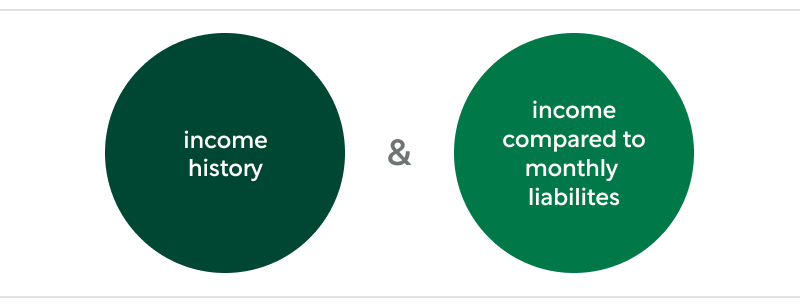
Consistency is crucial for self-employed borrowers. If you’re working for an employer that issues standard W2 paperwork, you’re more likely to have access to consistent proof of income. In the world of self-employment, that documentation might be harder to provide. You may have gaps in between gigs; you may have to track down paper trails from multiple projects or clients. Since you won’t be using W-2s to verify your income, our underwriters want to see an established track record of self-employment with stable and consistent income over a two-year period. You will need to demonstrate that you’ve been self-employed in the same line of business for the last two years before that income can be considered for your loan qualification. Plan to share 2 years’ worth of business tax returns in which you own 25% or more of the business. Our goal in vetting these materials is to ensure that the cost of your mortgage isn’t likely to become an undue financial burden.
Plan ahead for tax write-offs
If you’re self-employed, you probably qualify for various write-offs. These are costs that can be claimed as deductions when you file your taxes. It’s typically beneficial for self-employed people to write off business expenses because it reduces the amount of taxes they owe. But write-offs can actually work against borrowers looking to get a mortgage. Why? Write-offs save you money by reducing your overall taxable income.
Do mortgage lenders use gross or net income for self-employed?
Mortgage lenders look at your taxes to see your income history and figure out your net income, which is the amount of money you make after your expenses are subtracted from your total gross income. To lenders, that smaller income amount may qualify you for a smaller mortgage.
Self-employed borrowers can improve their chances of getting approved for a loan by planning ahead. If you want to increase the amount of qualifying income on your application, consider the long-term impact of writing off business expenses. And remember, to count toward qualifying income, most sources of revenue (such as commissions or freelance work) need to be documented consistently for a two-year period.

Calculate affordability based on income
Mortgages are a long-term commitment and we want to be sure that you’ll always be able to afford the monthly payments of your loan. Because people who are self-employed tend to have more variable income, we need to account for that risk by being conservative in our calculations. For example, if your net income as a self-employed earner has increased from one year to the next, you might be hoping we’ll base your loan amount on that higher number. However we’re required to calculate the average income amount from that two-year period and base your loan amount on that more conservative number. Likewise, if your net income has decreased from one year to the next, we’re required to use the lower value of the two years. After the market volatility of 2020 (which disproportionately affected gig workers and small business owners) our lender scrutiny has increased in an effort to give truly affordable loans to self-employed borrowers. That doesn’t mean you won’t qualify for a loan, but it does mean that we’ll be extra diligent when it comes to approving your loan amount.
Organize the paper trail for your down payment
Like all lenders, we need to verify the funds being used for a down payment. If you’re self-employed we recommend that you keep business and personal funds separate for loan application purposes. That’s because if business account funds are used, we’ll need to look at the business cash flow to verify that using these funds towards the down payment will not negatively impact the business. This can be a lengthy process, so separating the funds can help you avoid a paperwork headache.
Whatever account you choose, we’re required to determine which funds are eligible to use for your down payment. To do so, we’ll need to see two months’ worth of bank statements for any funds you plan on using for your down payment. If we notice any big transfers or deposits, we’re required to ask for explanations for the transfers, as well as letters verifying that down payment gifts from family members are truly gifts rather than loans. We also won’t be able to use unsourceable funds, so if you plan to move money around in preparation for your purchase (money under the mattress, for example) it’s best if you can do so at least two months in advance of applying for your loan. This will allow your funds to be “seasoned” for 60 days and there won’t be an extensive transaction history when we look at your past two months of bank statements.
Self-employed mortgages the Better way
We believe that being self-employed shouldn’t put a mortgage out of reach. Thanks to our 100% digital application, we’re able to deliver a mortgage experience that is simple and transparent for everyone, including self-employed individuals. Better Mortgage’s website is powered by smart technology that customizes your application based on what you've told us about yourself. Instead of answering blanket questions, you’ll only be asked to provide information that is relevant to your financial situation. Our goal is to help you avoid much of the inefficient paperwork that traditional lenders require. To learn more about your options as a self-employed borrower, get pre-approved in as little as 3-minutes.